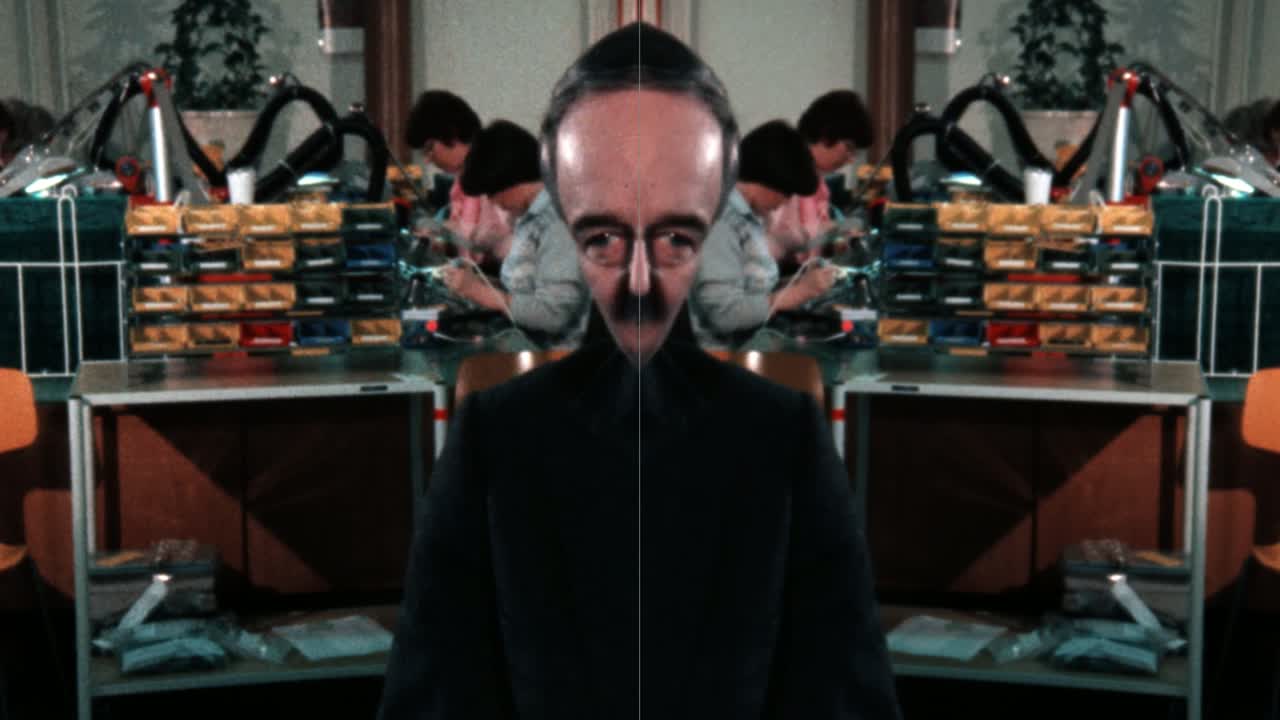
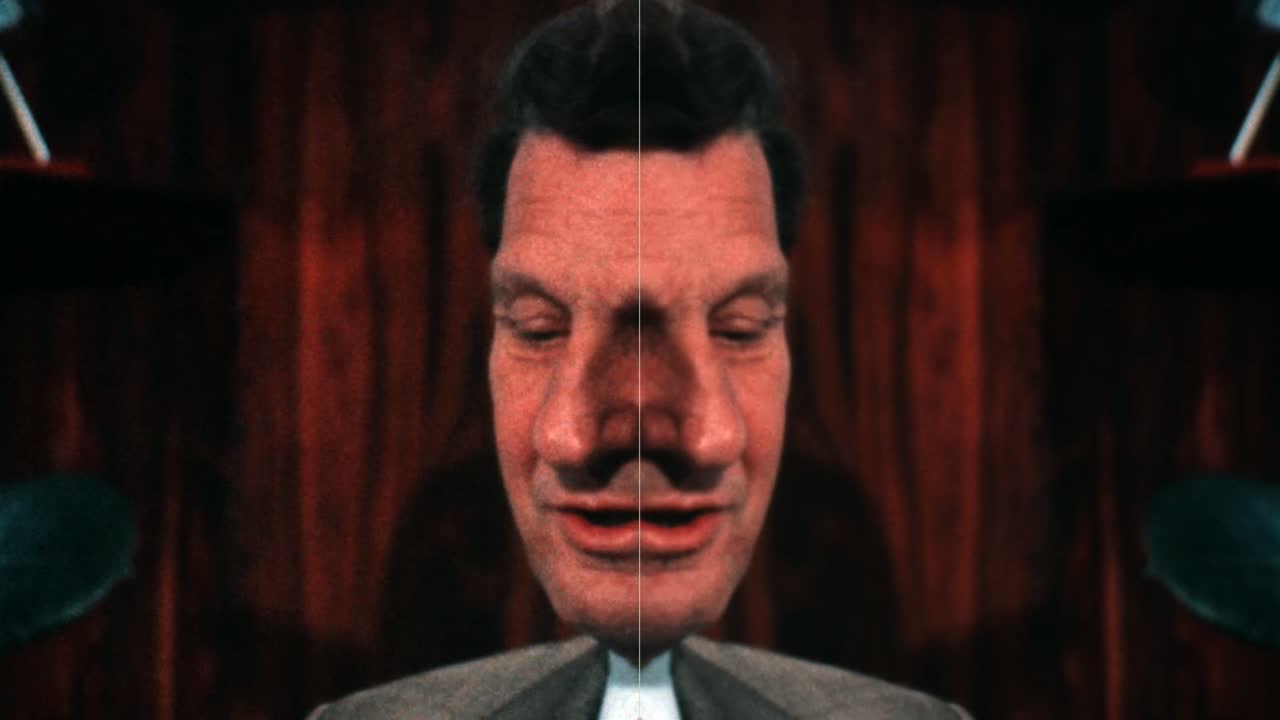
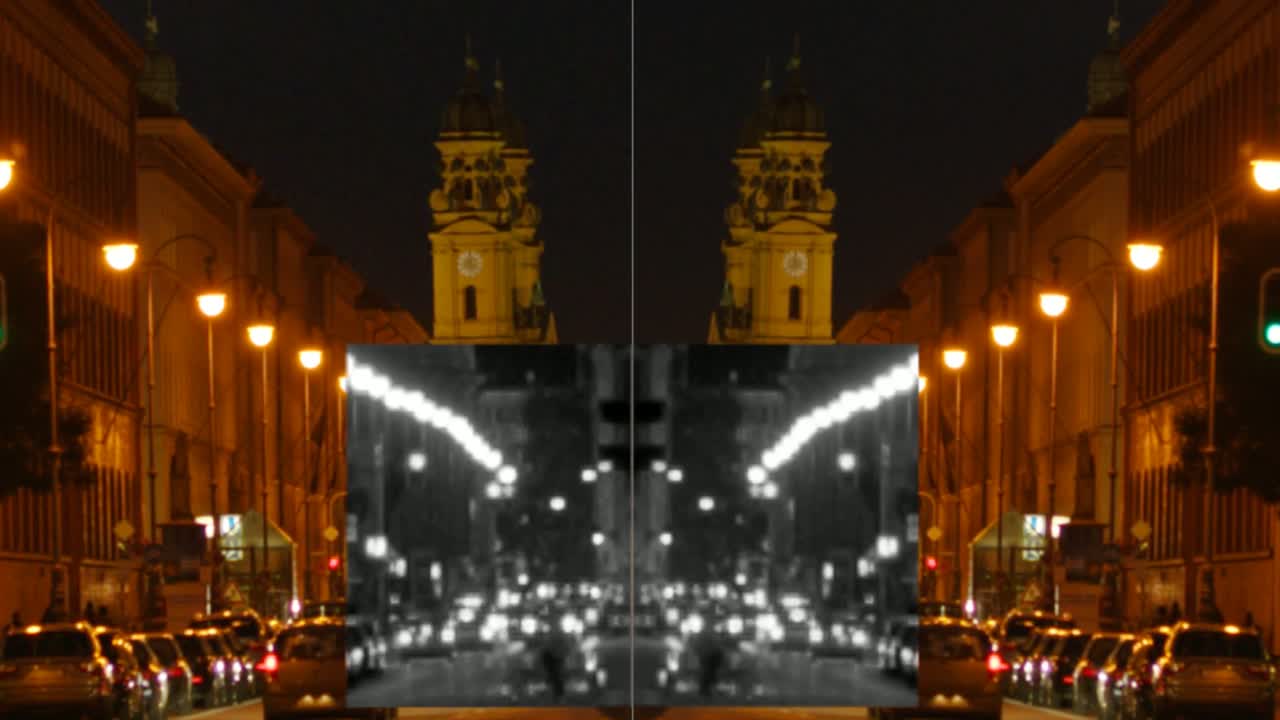
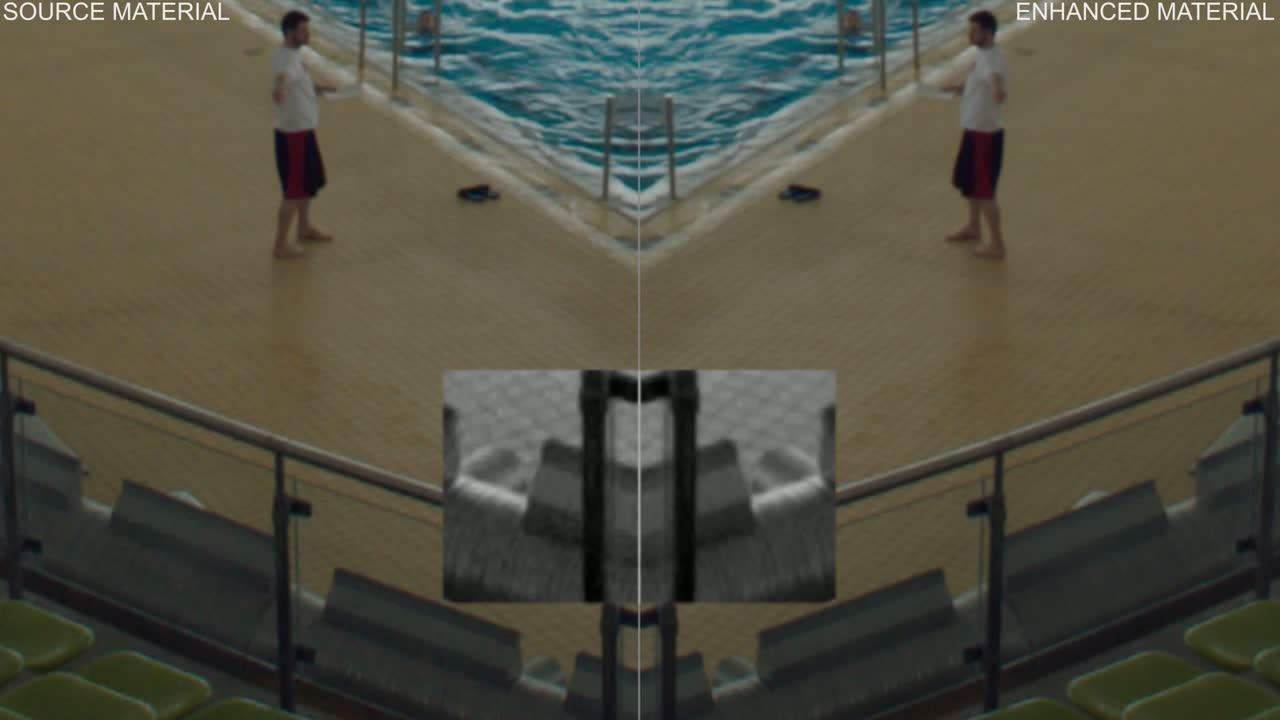
ANY RESOLUTION. ANY BANDWIDTH. ULTIMATE QUALITY

GPU-powered video enhancement through a SaaS platform. Remove noise, optimize bitrates, and enhance visual quality automatically.

Post-IBC: Bob Raikes on Wavelet Beam IRIS.BROADCAST explained AI Wavelet Beam explained AI Per Shot Encoding explained AI
IBC2026 Innovation Awards certificate: Content Creation Winner: European Broadcasting Union, CBC/Radio-Canada, NABA, Linux Foundation; contributors include Wavelet Beam 🏆 IBC2026 Winner

VIDEO NOISE MANAGEMENT

Any video in any resolution and bandwidth in the best possible quality

IRIS

Reduce bitrates by up to 40% while maintaining visual quality through advanced noise management

IRIS.ANALYST

Per-Title, Per-Shot, and Content-Adaptive Encoding

IRIS.BROADCAST

We are DVNR

IRIS.AI

AI-driven video upscaling

IRIS.RAW & BRAW-2-IRIS

Decreasing the noise levels before de-bayering

AV1 & FILM GRAIN SYNTHESIS

Decreasing the noise levels before de-bayering

WAVELET BEAM SERVICES

Professional Services video technology

PER SHOT ENCODING

Video bandwidth optimization

IRIS FOR AI & MACHINE VISION

Clean signals for broadcast AI, AI cameras, CCTV analytics and autonomous systems: cleaner input, better inference

IRIS & MXL

IRIS noise management integrated into the MXL workflow

ARTICLES & POSTS

Searchable archive of all LinkedIn articles and posts

ANY VIDEO AT ANY RESOLUTION AND BANDWIDTH, IN THE BEST POSSIBLE QUALITY

VIDEO ENHANCEMENT AND GPU-BASED WORKFLOWS via SaaS

Get rid of noise and grain in your film and video content with our automatic and ultra-fast GPU-based low-delay denoising application. It performs strongly on RAW footage, and already compressed material can be processed effectively too. Get the right cleanup for your different distribution feeds and homogenize your VOD catalog, so your bandwidth ladder can be improved significantly. The picture quality of born-digital content and 35mm film will be optimized to allow ultra-low bitrates while preserving the highest visual quality.

Mastering the Image Chain: The IRIS-Denoising Ecosystem

The IRIS Workflow by Wavelet Beam

At Wavelet Beam, we believe that achieving the highest visual quality means addressing noise where it matters most. Our IRIS-Denoising family is a precision toolset designed to integrate seamlessly into professional film and broadcast environments, from the first frame to the final stream.

1. Pre-Postproduction: The Clean Ingest

Before the creative work begins, the foundation must be perfect. We offer three specialized paths for early-stage optimization:

  • IRIS.RAW (DNG2DNG): The gold standard. By denoising directly on Bayer-pattern data before de-bayering, we preserve the maximum dynamic range.
  • BRAW2IRIS: Utilizing the BRAW SDK, this tool provides specific processing to optimize Blackmagic RAW footage for a clean start in the grading suite.
  • IRIS (Universal): Our versatile solution for all standard video formats, ensuring every source is ready for the high demands of post-production.

2. Post-Postproduction: The Master Polish

Even after a clean ingest, intensive Postproduction, including heavy Color Grading or complex VFX, can stress the image signal. By applying IRIS to high-quality intermediate formats like FFV1 or ProRes, we eliminate newly introduced artifacts, ensuring a pristine Master File.

3. Delivery & Distribution: IRIS Per-Shot Encoding

The final stage is where efficiency meets excellence. Our IRIS Per-Shot Encoding technology revolutionizes the way content is delivered:

  • Adaptive Intelligence: IRIS analyzes the master stream (e.g., from an FFV1 source) shot by shot.
  • Optimized Compression: By understanding the unique noise profile and detail level of every individual shot, we enable codecs (H.264, HEVC, AV1) to work with surgical precision.
  • The Result: Over 30% bitrate efficiency and maximum visual quality for VOD, Streaming, and Broadcast.

Modular by Design: Your Workflow, Your Choice

It is important to emphasize that IRIS does not need to be applied at every stage. Our ecosystem is built for maximum flexibility. Depending on your existing infrastructure or the specific technical nature of your signal, you can choose the most effective entry point:

  • Source-Driven: Use IRIS.RAW or BRAW2IRIS to protect your RAW data before it enters the creative pipeline.
  • Master-Driven: Use IRIS on an intermediate format like FFV1 to "clean up" after grading and VFX.
  • Distribution-Driven: Implement IRIS Per-Shot Encoding to ensure the most efficient and high-quality delivery possible.

At Wavelet Beam, we provide the surgical tools for your image signal, but you decide where they are most effective for your specific production environment.

The Impact of Noise on Video Encoding

Video codecs detect and code redundant information. The higher the compression, the more less important information will be removed. Noise in the video content reduces the temporal redundancy and forces the encoder to remove more original content. Applying High Fidelity Noise Management before encoding reduces the encoder's load.

  • The encoder's ability to detect motion and define motion vectors is negatively influenced by noise. Motion vector accuracy is essential.
  • Noise leads to false motion interpretation and faulty vectors, consuming bandwidth unnecessarily.
  • Statistical Multiplexing: Noisy services require more bandwidth and degrade overall multiplex quality.

With IRIS you always get all of these three points:

  • Higher Video Resolution
  • Video Bitrate Optimization
  • Video Image Enhancement

Software scalability and energy efficiency are increasingly critical. With our technology, massive archives can be processed on a single system. IRIS comes with a fully automated setup for cluster, cloud, and on-premises deployments. Our SaaS offering provides noise management workflows at a competitive per-minute rate.

IRIS

Revolutionize Your Video Quality with IRIS: The Ultimate File-Based Noise Management Solution by Wavelet Beam

Wavelet Beam's IRIS is redefining file-based video processing. Our advanced technology enables encoders to distinguish noise from actual image detail, unlocking higher perceived resolution and dramatically reducing video bitrates, all without sacrificing quality.

IRIS operates fully automatically and integrates effortlessly into your existing infrastructure, whether deployed in clusters, on-premises, or in the cloud. It's designed for scalability and energy efficiency, making it ideal for processing massive video archives using minimal hardware.

With IRIS, you gain optimized bitrates, enhanced visual quality, and preserved fine details, while reducing faulty motion vectors and compression artifacts. It's the smart choice for media teams that demand performance and precision.

Available as a SaaS solution with simple integration and flexible, per-minute pricing, IRIS brings high-end video quality within reach, at scale. Say goodbye to noisy archives and hello to clean, sharp, and bandwidth-efficient content with IRIS from Wavelet Beam.

IRIS.ANALYST

Per-Title, Per-Shot, and Content-Adaptive Encoding with IRIS.ANALYST

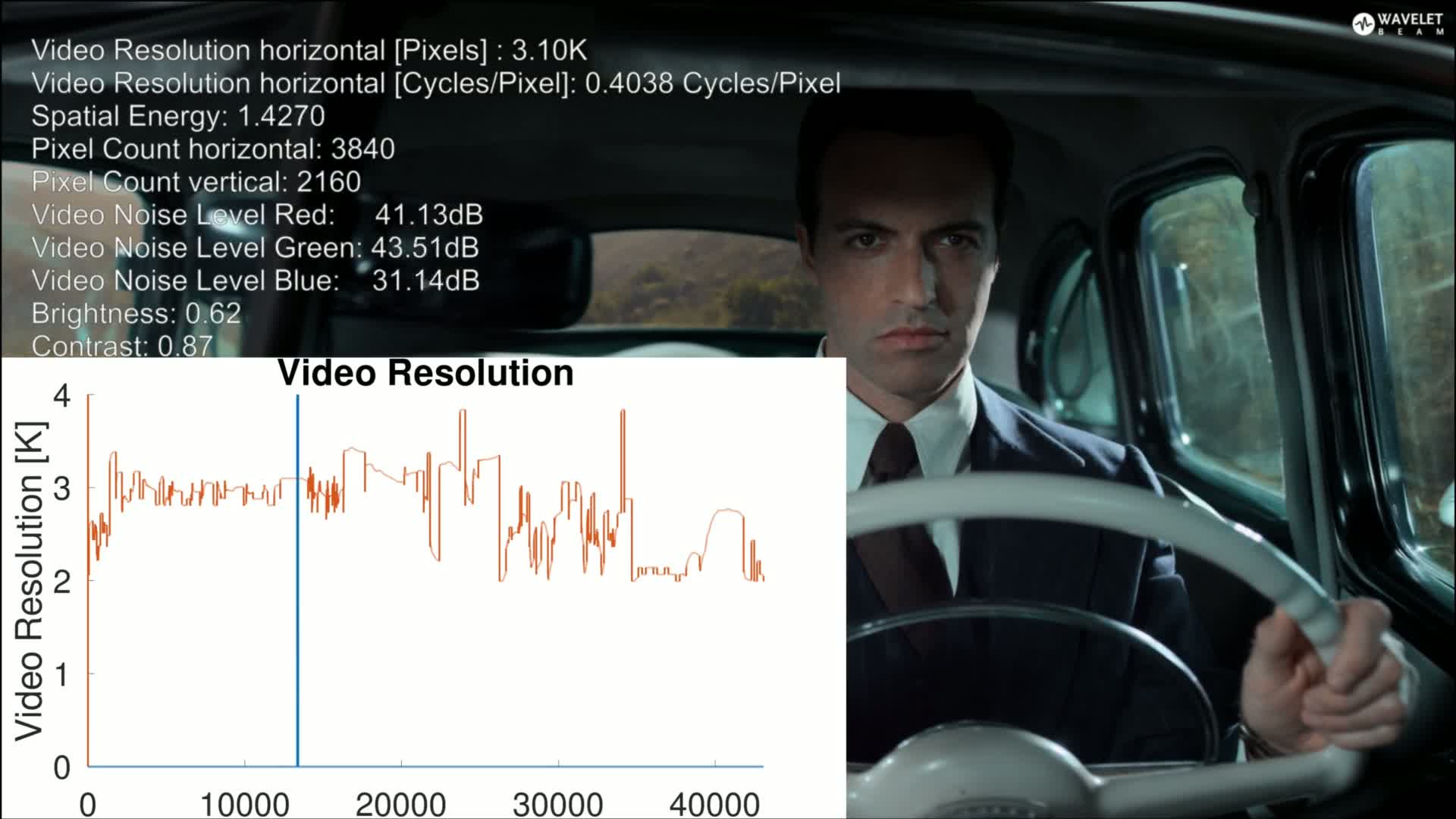
Not all video content is created equal, different scenes require different bitrates to deliver high-quality results. While we want to avoid wasting bandwidth, we also aim to preserve every detail. IRIS.ANALYST enables smarter encoding decisions by analyzing spatial and temporal complexity at the per-title and per-shot level.

Noise and grain are part of a video's spatial and temporal signal. As noted by Netflix, these factors alone can impact bitrate needs by up to 30%. At Wavelet Beam, we've confirmed this: leveraging IRIS.ANALYST can lead to a 30% reduction in bitrate, while maintaining or improving perceived visual quality.

IRIS.ANALYST Feature Set:

  • Automatic selection of video noise profiles
  • Scene and cut detection for per-shot encoding
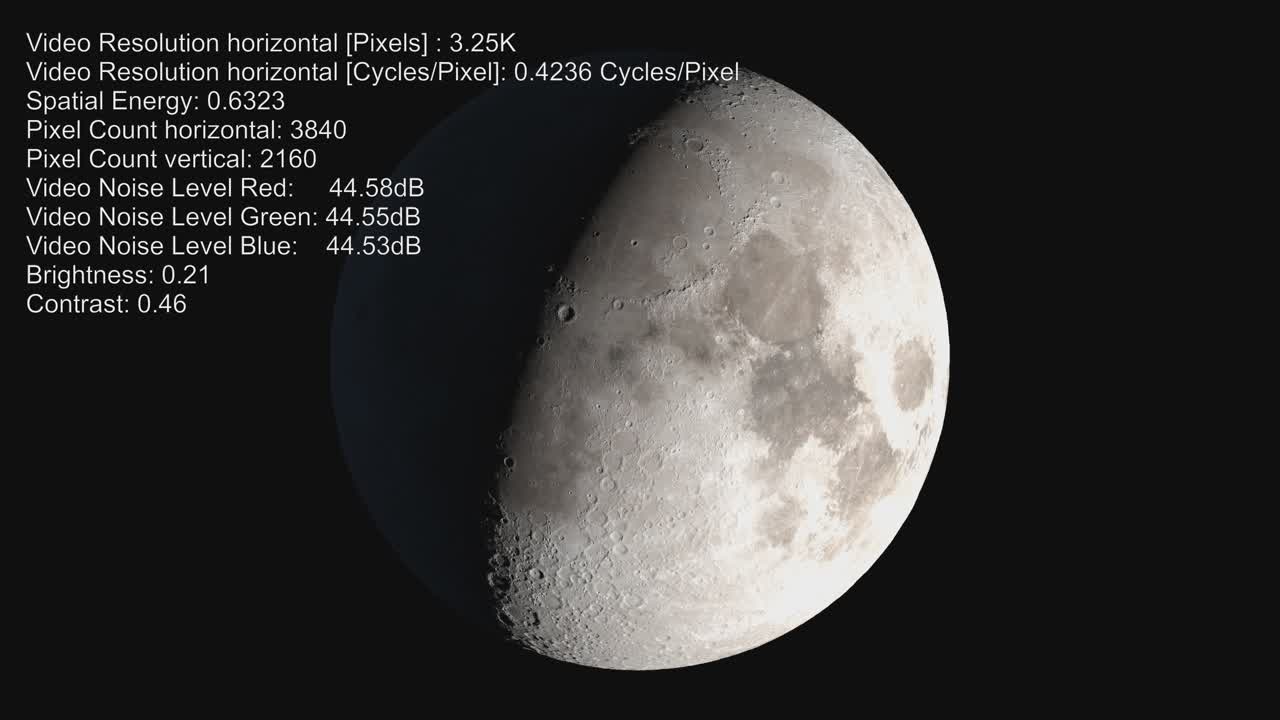
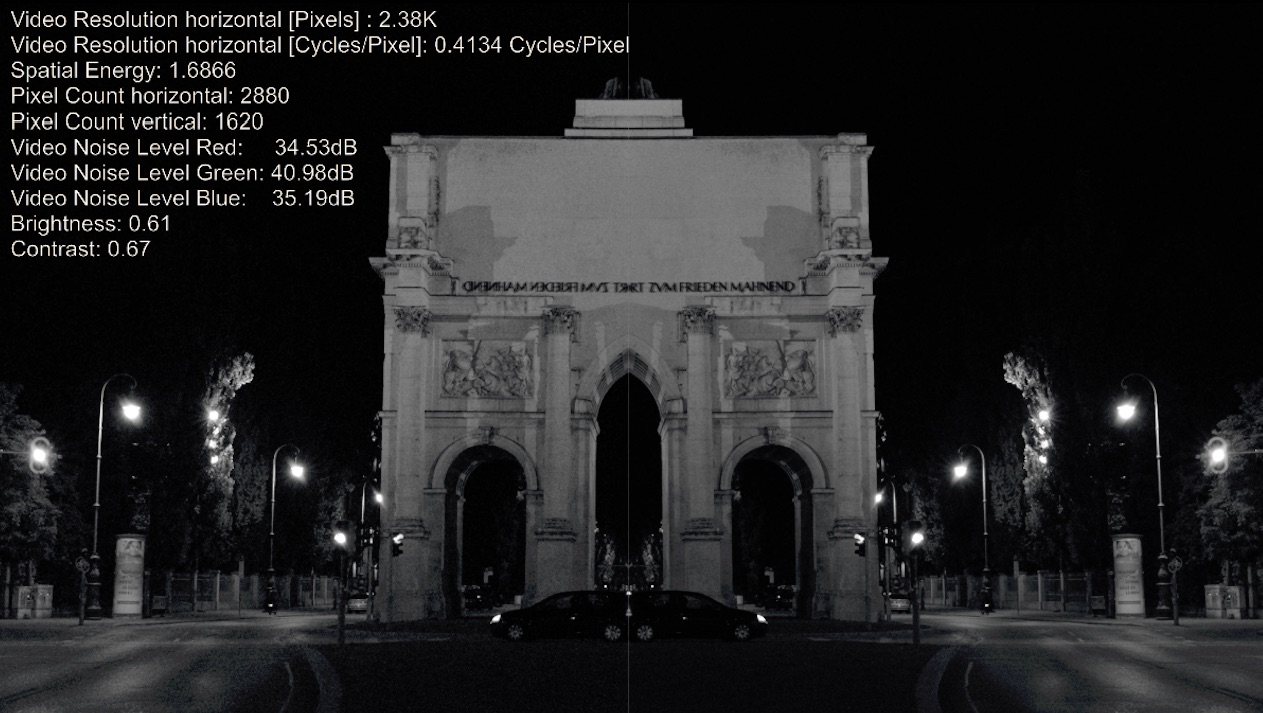
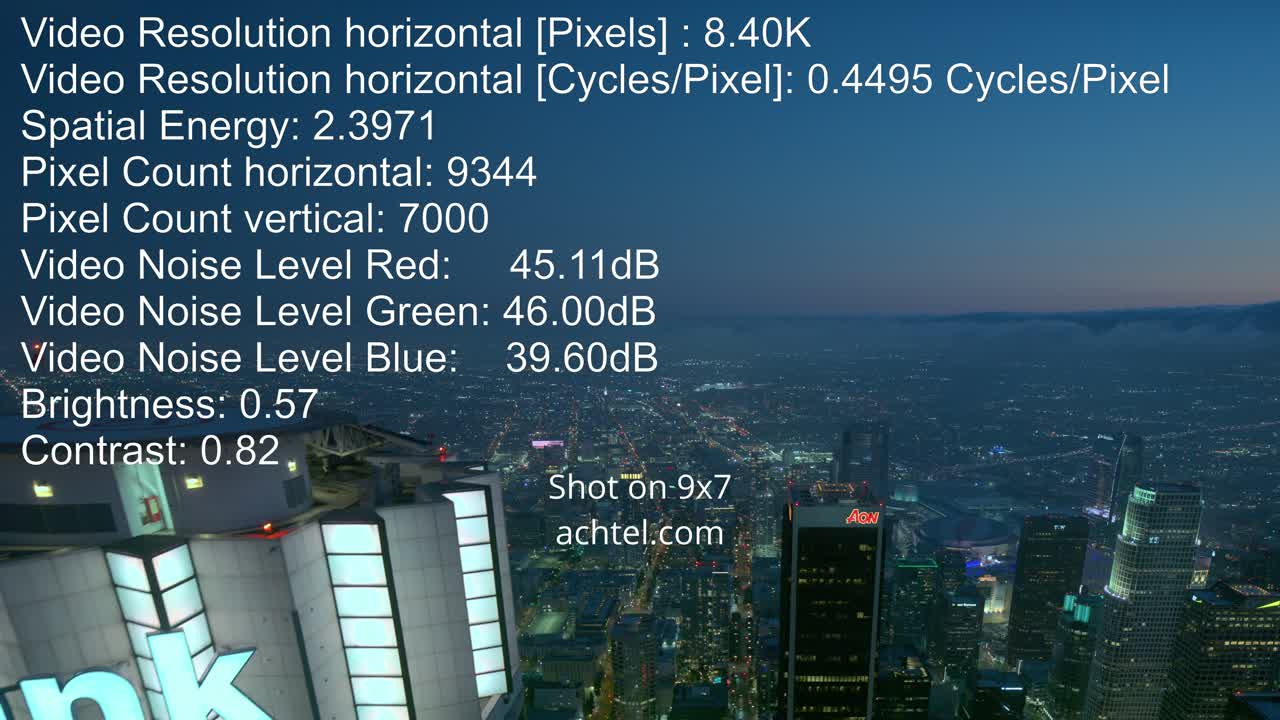
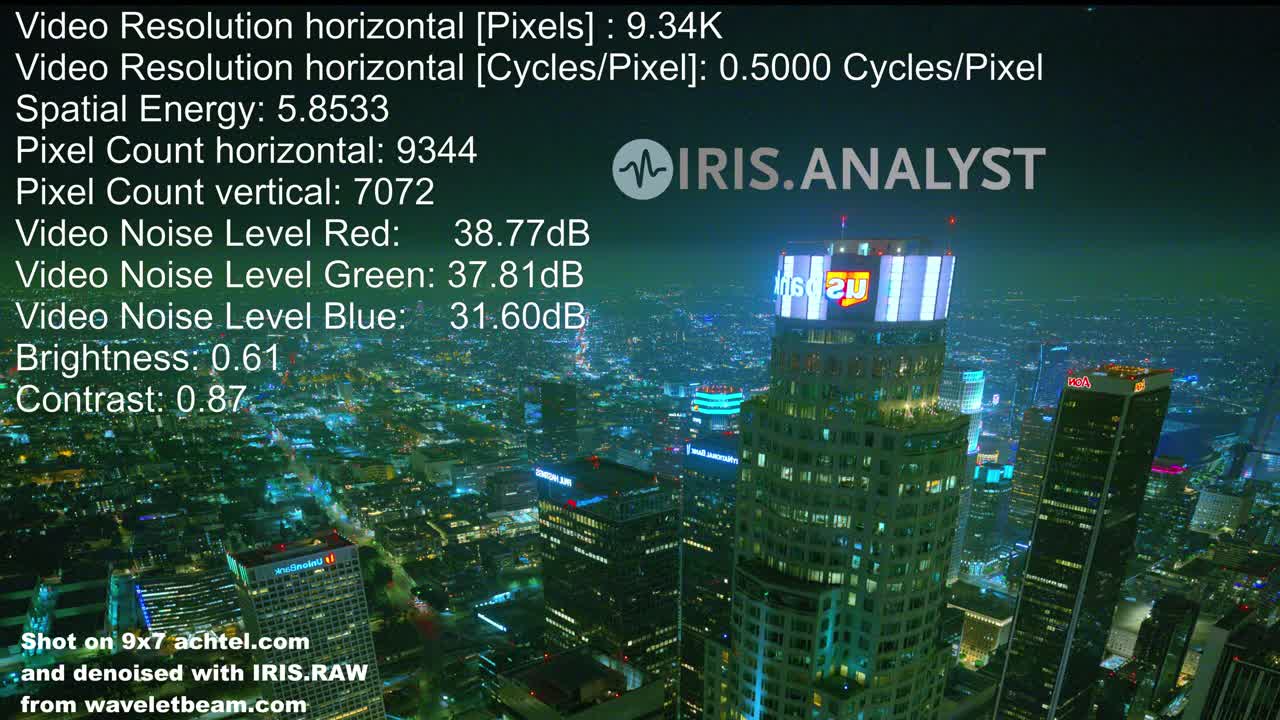
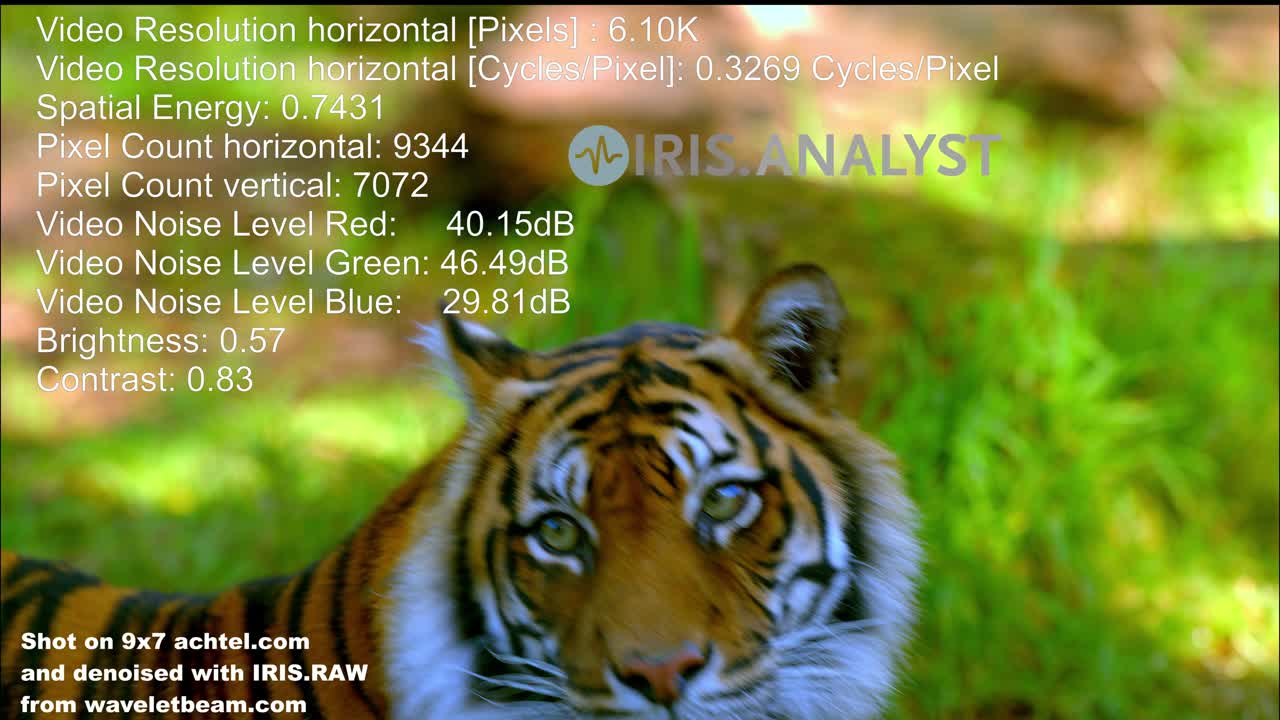
  • Measurement of video resolution, no test target required
  • Quantified video noise levels using PSNR [dB]
  • Spatial and temporal complexity measurement
  • Contrast and brightness evaluation

Turn on AUDIO!

The LA Downtown and Tiger clips above are zoomed and scaled from 9K to UHD (shot on 9x7).

WaveletBeam IRIS Analyst

Real-Time Denoising for Broadcast-Grade Video

IRIS.Broadcast is a high-performance, GPU-powered Digital Video Noise Reducer (DVNR) designed for live production and broadcast environments. Scale from 8+ simultaneous 1080p streams on a single GPU to multi-GPU UHD and 8K pipelines, all with ultra-low delay.

IRIS not only delivers visually clean output, but also reduces video bitrate by up to 30% by optimizing motion vector precision.

  • GPU-accelerated, highly scalable
  • Real-time 1080p, UHD, and up to 8K
  • Multi-stream efficiency, ideal for high-density workflows

At Wavelet Beam, we're pushing the boundaries of what's possible in video technology. We're excited to introduce real-time support for IRIS and IRIS.Analyst.

Our advanced IRIS SDK powers Video Noise Management and Video Analytics at scale, enabling broadcasters to reduce bitrates while enhancing video quality, delivering a richer, sharper viewing experience.

What sets IRIS apart? It's not just about reducing visible noise, it's about lifting the signal out of the noise floor. This means potentially recovering image information that would otherwise be lost or unusable, far surpassing traditional noise reduction methods that often blur or distort fine details.

Powered by CUDA acceleration, IRIS is built for performance and scale. It can process multiple video streams on a single GPU, and scale efficiently across multiple GPUs, making it ideal for high-demand broadcast environments.

A demo setup is available for interested B2B partners. Currently supporting SDI, with ST 2110 integration coming soon.

Let's redefine the future of broadcast, together.

This video has sound!

IRIS SDK

IRIS.AI

Wavelet Beam proudly presents IRIS.AI: Advanced AI-Based Video Upscaling


Before applying AI-driven upscaling, it's critical to first denoise the video. Why? Because noise in the original footage can confuse AI algorithms, leading to artifacts and reduced visual quality in the final result.


IRIS.AI combines Wavelet Beam's cutting-edge video denoising with powerful deep learning upscaling to ensure exceptional results. Clean input means the AI can focus on real image content, not on random noise, resulting in sharper, more natural details and improved resolution.


By preprocessing with IRIS, IRIS.AI receives a cleaner signal, allowing the upscaler to add pixels more accurately. The result: enhanced visual quality, higher perceived resolution, and a stunning viewing experience, ideal for remastering, broadcasting, or archive restoration.


IRIS.AI Upscaling Example 1

IRIS.AI Upscaling Example 2

BRAW-2-IRIS

Revolutionizing the BRAW Workflow: From Budget Cameras to 12K or 16K Immersive


At Wavelet Beam, we believe that image quality should not be limited by your hardware's price tag. Today, we are proud to announce the B2B Early Access phase for BRAW2IRIS, our fully automated, high-fidelity noise management solution.


"Start grading again instead of waiting for the denoising."


Why settle for "good" when you can achieve professional-grade results from any Blackmagic sensor? BRAW2IRIS transforms your footage into a cinematic masterpiece by integrating our advanced IRIS-Denoising directly into your existing BRAW pipeline.


The Technical Advantage:


  • Near-Real-Time Speed: Speed is our standard. Our process is so optimized that your RAID speed is the only limitation, not the processing.
  • 16-Bit Precision: We process your 12-bit source in a dedicated 16-bit pipeline to eliminate rounding errors and banding.
  • Maximized Dynamic Range: By cleaning the noise floor, we unlock deeper shadows and superior HDR results, giving you more stops of usable dynamic range.
  • Higher Usable Resolution: We reveal fine details previously masked by digital noise, effectively increasing your final output clarity.
  • Organic Cinematic Texture: We don't "smear" pixels. We preserve a natural noise floor while removing distracting artifacts, maintaining that sought-after filmic look.

Scalable from Indie to 12K or 16K Immersive


Whether you are managing a fleet of budget-friendly Blackmagic cameras or pushing the boundaries of 12K or 16K Immersive productions, BRAW2IRIS scales to your needs, delivering superior image stability and professional-grade master files, fully automated.


B2B Early Access


We are currently rolling out BRAW2IRIS exclusively to select production houses and B2B partners who are ready to push their BRAW workflow to the absolute limit.


Are you ready to elevate your footage and reclaim your time? Contact us at: info@waveletbeam.com


#WaveletBeam #BRAW2IRIS #BlackmagicDesign #PostProduction #16KImmersive #HDR #Cinematography #HighFidelity #BRAW #IRIS #QVBE #VMAF #PSNR #12K


Wavelet Beam proudly presents IRIS.RAW: The Next-Generation Video RAW Data Denoising Solution


Wavelet Beam introduces IRIS.RAW, a powerful solution for video RAW data denoising. Modern digital cameras use single-chip Bayer sensors that capture only one color channel per pixel. In postproduction, the two missing color channels must be interpolated through the de-bayering process. However, noise inherent in the camera signal can distort this process, resulting in inaccuracies.


By reducing noise levels before de-bayering, IRIS.RAW ensures much higher resolution and improved HDR performance, delivering pristine quality for your video footage. Whether you are working in 4K, 6K, or even 12K, IRIS.RAW provides a clean foundation that enhances both the editing and grading processes.


Our solutions, IRIS and IRIS.RAW, are GPU-accelerated, high-fidelity denoising applications that offer one of the fastest processing speeds on the market. They are designed to integrate seamlessly into high-resolution workflows where conventional tools struggle to handle real-time denoising.


IRIS.RAW is the perfect solution for workflows requiring real-time denoising, especially when handling high-resolution content that demands significant CPU/GPU power. By offloading the denoising process, you free up resources for color grading and real-time video enhancement, ensuring better dynamic range, resolution, and overall streaming performance.


Based on Wavelet Beam's GRAIN & NOISE REDUCER, IRIS.RAW extends our commitment to high-quality video processing and seamless workflow integration.


IRIS.RAW Video Denoising

IRIS.RAW Processing

IRIS.RAW High-Resolution Processing

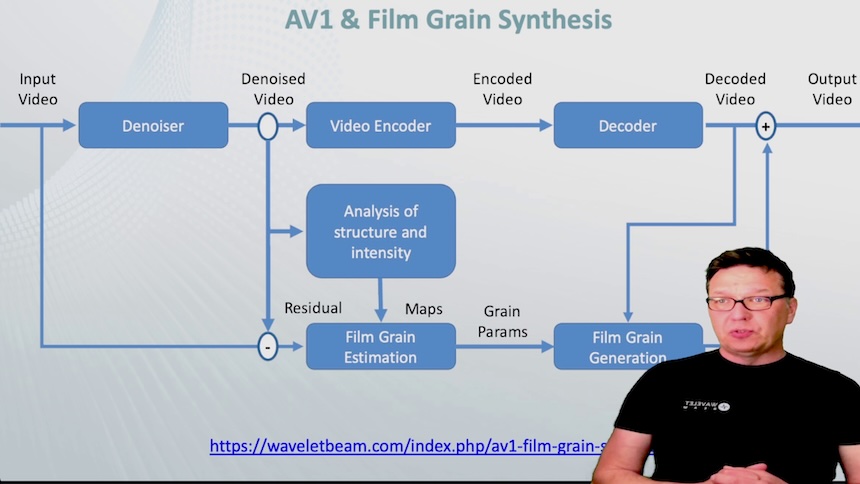
AV1 & Film Grain Synthesis

Article, July 8, 2026

Stop Masking Banding: Why Traditional FGS Fails and How We Solve It

AV1 and Film Grain Synthesis, UHD below 10 Mbit/s, Wavelet Beam

In the encoding industry, there is a persistent approach of trying to mask banding artifacts by simply adding noise or artificial grain. At Wavelet Beam, we see it differently: if banding occurs, it simply means encoding standards were not maintained. Attempting to conceal artifacts and denoising flaws through blanket re-graining ultimately fails to improve the final visual quality.

The challenge is well known, as Netflix highlighted at the Demuxed conference: automated denoising with standard noise management systems cannot be achieved without loss of fidelity. Consequently, they suggested completely omitting Film Grain Synthesis (FGS) for such scenes.

The problem with this approach, however, is that it causes a noticeable visual disruption for the viewer, as the continuous, natural grain experience is broken across the timeline. Generating truly accurate film grain tables is highly complex and rarely works out of the box.

Pushing Boundaries Instead of Hiding Artifacts

We refuse to accept this status quo. To redefine the boundaries of high-fidelity encoding, we break this cycle. The solution lies in a perfectly aligned chain of precise pre-processing and intelligent compression. We combine three technological pillars into one highly efficient pipeline:

  • IRIS-Denoising: Our high-fidelity noise reduction that precisely analyzes the signal and preserves visual integrity instead of destroying fine details.
  • Precise AV1 FGS: Advanced analysis to generate exact grain tables, mathematically reconstructing the original look rather than crudely covering up flaws.
  • Single-pass Dynamic Per-Shot Encoding: Our dynamic, shot-based encoding pipeline that guarantees optimal efficiency and bitrate distribution for every sequence in a single pass.

Become Our Validation Partner

To demonstrate the full potential of this technology, we are actively looking for industry partners to run comprehensive evaluation tests. If you want to put the combination of IRIS-Denoising, AV1 FGS and our Single-pass Dynamic Per-Shot Pipeline through its paces and set new benchmarks in encoding quality, let's connect: info@waveletbeam.com

Read and discuss this article on LinkedIn

#VideoEncoding #AV1 #IRISDenoising #FilmGrainSynthesis #WaveletBeam #VideoCompression #Broadcasting #HighFidelity

AV1 is the first video codec with mandatory film grain synthesis. This enables significant bitrate savings while improving image quality, true efficiency instead of artificially measured improvements. Film Grain Synthesis allows for video denoising, enabling lower bitrates during distribution encoding. Netflix reports 30% savings, and we confirm this.

Important: The integrated AV1 denoising (2D Wiener filter) is not sufficient to preserve high image resolution. Professional video noise management is far more than just a filter. Our fully automated HPC solution is based on thousands of lines of CUDA code, optimized for maximum quality. Basic solutions may suffice for user-generated content, but high-end content requires IRIS & IRIS.ANALYST.

The look of film is now available on second screens without internal TV filters. With high-resolution displays and short viewing distances, a higher subjective resolution is achieved, especially for cinematic material, this is a genuine benefit.

Interested rights holders can contact us at info@waveletbeam.com. Among other things, we encoded the Netflix test scene "MERIDIAN" in UHD with AV1 + Film Grain Synthesis at under 6 Mbit/s: 12 minutes at just 536 MB. For internal tests, we are also happy to accept 2-minute samples shot on 16mm or 35mm film.

The codec war is over. Film Grain Synthesis also works with older and future codecs. That's why it makes sense to integrate noise management once into the workflow, regardless of the target codec. Quality is once again the focus, not just bitrate measurement.

Note: The FGS samples currently on our website are outdated. To protect our IP, we present our latest video demos and side-by-side benchmark materials exclusively during direct sessions with selected partners.

If the video below doesn't start, please play it manually using VLC.

16mm 1728x1248 -10bpc (Full HD pixel count), AV1 @1.2 Mbit/s + Film Grain Synthesis, Encoding Test Feb. 2024

16mm 1728x1248 -10bpc (Full HD pixel count), AV1 @2 Mbit/s + Film Grain Synthesis, Encoding Test Feb. 2024

Block-based encoders are unable to correctly preserve film grain at low bitrates. The fine frequencies of the grain are distorted, often visible as flickering or artifacts. PSNR or VMAF cannot correctly detect this.

During decompression, motion vectors are used to reconstruct images from blocks of previous frames. Quantization alters the grain amplitude, leading to modulation over time. The result is artificial-looking, displaced "noise" with no authentic film look.

Conclusion: AV1 + Film Grain Synthesis is the future for high-quality video at low bitrates.

Our Services

Wavelet Beam Services offers an all-inclusive package for cleaning video content and film restoration. Nowadays, the number of UHD television sets is increasing. Thus, the quality of DVD and Blu-ray products also has to be increased to provide the best viewing experience for customers. Wavelet Beam Services offers noise management that takes your film material to the next level. Be ready for UHD.


GPU Workflows

PROFESSIONAL SERVICES: Hands-on training and consultancy services for FFmpeg

FFmpeg is a free open-source software project consisting of a suite of libraries and programs for handling audio and video. FFmpeg serves as the engine for most of the largest cloud encoding farms in the world and gives you an alternative to commercial transcoding products.

Possible topics:

1. Quality matrix: VMAF and PSNR

2. Optimizing your bitrate ladder

3. FFmpeg automation on LINUX

4. Speedup encoding for Adaptive Bitrate Encoding

5. How to analyze files with MediaInfo, Bitrate Viewer, Apple's AVQT

6. Using FFv1 as Intermediate Format


GPU Workflows

PROFESSIONAL SERVICES: Video Encoder Comparison using Video Quality Metrics

As an independent consultant, Wavelet Beam offers services for video encoder shootouts and optimization of video bitrate ladders. These tasks are time-consuming and the measurement of the video quality metrics needs a lot of compute power, which Wavelet Beam is also offering. In the design phase of a new video workflow, it is important to know all details about encoding speed and video quality in advance. Additionally, we offer video test sequences, which make it possible to measure parameters like resolution or dynamic range of the End-to-End workflow.


GPU Workflows

Perceptually Optimized Video Coding and Quality Measurement

In recent years, Wavelet Beam has developed a new, high-fidelity noise management system. All our image analysis and enhancement technologies are based on the underlying model of noise and signal shares. This knowledge is what we are using in our Perceptual Video Quality Measurement process. As we learned, a lot of codec vendors don't like to compare their encoders because real numbers would be a risk to sales. If you have a vendor shootout, Wavelet Beam Services will provide you with reliable numbers. If you are a codec vendor, the Wavelet Beam Perceptually Optimized Video Coding SDK is a great opportunity to be two steps ahead when it comes to picture quality and ultra-low bandwidth encoding.


GPU Workflows

PROFESSIONAL SERVICES: TEST CHARTS

Collaboration between Cinelab London and Wavelet Beam

Vendor-independent 35mm film test strips are available again

INCLUDING:

* 35mm test charts

* Test chart generation

* Image quality analyses

* Workflow analyses

The technical quality parameters of film scanners are changing over time. The sensor performance is decreasing and artifacts such as dead or hot pixels will appear. Noise levels can also increase over time and the later you recognize quality issues, the more time and money you lose. In a collaboration between Cinelab London and Wavelet Beam, we offer 35mm negative and print film. Additionally, Wavelet Beam offers the analysis of the scanned film material.


GPU Workflows

PROFESSIONAL SERVICES FOR GPU WORKFLOWS

INCLUDING:

* Project Management

* Implementation

* CUDA

* Image Processing LIBs

* Algorithm Development

* Deep Learning for Video Analytics

  
DVB Services

PROFESSIONAL SERVICES FOR DTV AND FILM

INCLUDING:

* Project management

* Implementation

* System analyses

* RFQs

* Test chart generation

* Image quality analyses


Per Shot Encoding

IRIS Adaptive Per-Shot Encoding analyzes every shot individually and allocates bits exactly where the picture needs them. Combined with IRIS Denoising, which removes noise before the encoder ever sees the signal, this delivers higher VMAF, fewer quality drops in demanding scenes and a more consistent viewing experience across the entire stream.

UHD in HEVC at 7.54 Mbit/s with 96.02 VMAF

April 29, 2026

Test material: Netflix "Meridian", encoded in HEVC and delivered via HLS in UHD at 59.94 fps.

7.54 Mbit/sBitrate, UHD @ 59.94 fps
96.02VMAF
5.06QBVE, lower is better
HEVC / HLSCodec and delivery

How? By removing noise from the signal before the encoder ever sees it, combined with IRIS Adaptive Per-Shot Encoding, which analyzes every shot individually and allocates bits with surgical precision. The result: higher VMAF, fewer quality drops in demanding scenes and a more consistent viewing experience across the entire stream.

Our customers see this every day, on their own material. If you want to see what it does to yours, let's talk.

#Streaming #HEVC #HLS #UHD #Broadcast #OTT #PerShotEncoding #VideoQuality #IRIS #VMAF #QBVE #WaveletBeam

How IRIS Per-Shot Encoding Works

  1. Denoise first: IRIS Denoising cleans the signal before it hits the encoder, so bits are spent on detail, not on noise.
  2. Analyze every shot: IRIS.ANALYST generates precise metadata for each shot in a single pass, without iterative VMAF loops.
  3. Allocate bits per shot: Every scene gets exactly the bitrate its complexity requires, for up to 30% bitrate savings.
  4. Deliver via HLS: Dynamic Per-Shot Encoding with HLS, in HEVC or AV1, with our in-house Film Grain Synthesis for AV1 VOD.

The entire pipeline runs as a fully automated process with flexible Kubernetes integration, as well as via Docker and VMs.

Per-Shot vs. Per-Title: Why One-Path is the Future

January 31, 2026

Traditional Per-Title encoding relies on exhaustive VMAF-driven loops that consume massive computing power and time. At Wavelet Beam, we believe efficiency should be inherent, not iterative. Our One-Path philosophy eliminates redundant analysis cycles.

The Wavelet Beam Advantage: Intelligent Precision

By leveraging IRIS.ANALYST, we generate precise metadata in a single step. This allows our Per-Shot Encoding to adapt instantly to the unique complexity of every scene, ensuring optimal quality without the overhead of multiple encoding passes.

  • IRIS-Denoising Integration: We clean the signal before it hits the encoder, ensuring bits are spent on detail, not noise.
  • One-Path Workflow: Metadata generation and encoding happen in a seamless, high-speed pipeline.
  • Up to 30% Bitrate Savings: Superior visual fidelity at significantly lower bandwidth through shot-based granularity.
#WaveletBeam #PerShotEncoding #IRISDenoising #OnePath #GreenStreaming

QBVE: Is it just a single glitch or a nightmare?

February 5, 2026

In high-end video encoding, averages can be misleading. At Wavelet Beam, we've seen cases where a video achieves a "Mean VMAF" of 95, yet contains visible quality collapses that ruin the viewer experience.

QBVE Formula

The Wavelet Beam Solution: QBVE

We utilize QBVE (Quadratic Bad VMAF Energy). Unlike standard means, QBVE functions as a Gated MSE, measuring the failure energy only when it falls below our quality floor:

QBVE Diagram Comparison

Comparison: Standard Encode (QBVE 9.46) vs. Wavelet Beam IRIS (QBVE 5.06).
Double-click to open. Single-click to zoom.

While the standard encoder (left) struggled, our IRIS per-shot optimization (right) preserved structural integrity and nearly halved the "Bad Energy."

#WaveletBeam #VMAF #QBVE #VideoQuality #IRIS

IRIS FOR AI: BROADCAST, EDGE-AI & MACHINE VISION

Clean signals for AI models in live broadcast, AI cameras, CCTV analytics and autonomous systems

New Article, September 26, 2026

Why do AI video models in broadcast environments often fail when moving from testing to live transmission?

Wavelet Beam AI Workflow: integrated live training and deployment with the IRIS Denoising Engine, MXL and DMF

Broadcasters operate with an unpredictable mix of camera sources: studio setups, field cameras, drone feeds, archives and user-generated content. Every source brings its own sensor noise, gain artifacts and heavy video compression.

During AI model training, neural networks fall into shortcut learning. Instead of analyzing real scene content, they learn specific sensor noise signatures or compression artifacts. As a result, when an automated camera tracking or live object detection system encounters a different camera feed, its detection confidence drops immediately.

Standard denoising solutions fail in broadcast because they simply blur or smooth the picture. Blurring wipes out fine textures, sharp edges and essential detail, stripping away the exact information AI models need to make accurate predictions. At Wavelet Beam, we solve this bottleneck for broadcast pipelines using IRIS-Denoising.

Why IRIS-Denoising Changes the Game for Broadcast AI

  • Signal extraction without blurring: IRIS-Denoising does not smear or flatten video data. It isolates and lifts the true visual signal straight out of the noise. Fine details, high-frequency textures and crisp edges are fully preserved, delivering clean, high-contrast feature maps for neural networks.
  • Fully automatic across any broadcast feed: Broadcast engineers do not have time to manually tune noise profiles during live productions. IRIS Video-Denoising adapts dynamically to changing ISO levels, low-light gain or aggressive codec compression across every incoming stream.
  • Higher inference accuracy for automated workflows: Whether for live player tracking, automated graphic overlays or AI-driven stream moderation, cleaner input signals directly improve bounding box precision, tracking continuity and overall confidence scores.
  • Built for live broadcast infrastructures: IRIS-Denoising operates seamlessly in both file-based offline environments and live workflows via MXL and DMF integration.

At Wavelet Beam, we are also building AI-based Media Functions that integrate directly into live broadcast pipelines, enabling high-precision AI processing with minimal latency.

Read and discuss this article on LinkedIn

#IRISDenoising #WaveletBeam #BroadcastEngineering #LiveProduction #ComputerVision #VideoAI #BroadcastAI #DMF #MXL #IRIS

Edge-AI, Machine Vision and Video Coding for Machines

The paradigm shift from human-centric to machine-centric video encoding starts with one unavoidable prerequisite: a clean signal. That is exactly what IRIS delivers.

The Shift: From Human Perception to Machine Inference

For decades, video encoding was optimized for human viewers: PSNR for mathematical fidelity, SSIM and VMAF for perceptual quality. Artificial intelligence has fundamentally different requirements. It does not care whether a picture looks beautiful. It needs feature preservation, temporal consistency, inference-relevant frequencies and maximum information density.

Where IRIS Sits in the VCM Stack

Video Coding for Machines (VCM) defines a four-layer architecture. Many VCM solutions assume clean input and start at layer 2 or 3. IRIS owns Layer 1, Signal Conditioning, the layer that sets the ceiling for everything above it. IRIS.ANALYST extends this into Layer 2 with per-shot complexity metadata that machine-optimized encoders can act on directly.

The Edge-AI Pipeline Problem

A modern CCTV deployment produces 4K video 24/7 across hundreds of cameras. 99.9% of that footage contains no relevant event. The industry is shifting from central-server analysis of raw streams toward edge-based inference, transmitting only events, metadata and compressed reference video. IRIS improves inference quality at the edge while simultaneously reducing the bitrate of any reference stream that must be transmitted.

Relevant Market Segments

CCTV and video analytics platforms · Edge-AI SoC and camera silicon vendors · Video Management Systems · Cloud video analytics · Streaming and CDN encoding infrastructure · Autonomous systems (robotics, ADAS, UAV) · MPEG VCM standardization working groups

MXL Logo
🏆

Winner of the IBC2026 Innovation Award, Content Creation

The open-source Media eXchange Layer (MXL) project has won the IBC2026 Innovation Award for Content Creation, and we at Wavelet Beam are thrilled and honored to be part of the winning project as a contributor! At the EBU booth, in the Live Multi Vendor Showcase on a 3 worker node Kubernetes cluster powered by NVIDIA Holoscan for Media, we demonstrated our MXL Clip Player and GPU-accelerated IRIS Video Denoising in action.

IRIS & MXL

IRIS Video Denoising as a native MXL Media Function

Press Release

Dynamic Media Facility & MXL: A Fundamental Architectural Step

Paderborn, August 30, 2026: The demands placed on modern media production keep growing: dynamic formats, variable data rates and the pressure to achieve high cost efficiency all call for flexible infrastructures. While classic setups depend on constantly exchanging video data between individual devices over physical or IP interfaces such as SDI and ST 2110, even for internal processing steps, the Dynamic Media Facility (DMF) in combination with the Media eXchange Layer (MXL) introduces a fundamental architectural step.

As a Software-Defined Video (SDV) solution built on Kubernetes, it decouples video processing from dedicated hardware. Established standards such as SDI and ST 2110 fully retain their role for external signal connectivity, while the internal data exchange between the processing functions takes place highly efficiently and directly within the software infrastructure.

Technical Context

Technical context: DMF layers with applications, NMOS control layer, MXL data plane and Kubernetes compute hosting on top of the infrastructure

DMF is the EBU/NABA reference architecture: NMOS decides, MXL transports the data, Kubernetes schedules the compute.

From Static Hardware Standby to Dynamic Software Resilience

In traditional broadcast environments, safeguarding operations relies on substantial over-provisioning: dedicated hardware cards (FPGAs) and standby devices have to be kept available at all times to guarantee 1:1 or 1:N redundancy, capacity that ties up capital while sitting idle in regular operation and that is tied to the replacement cycles of the hardware.

The DMF architecture resolves this problem at its root:

  • Hardware decoupling with a hybrid option: Instead of device-bound hardware, containerised software on standard servers (COTS) primarily handles signal processing. This does not rule out specialised compute at all: GPUs as well as existing FPGAs remain important building blocks of modern workflows.
  • A call to broadcasters and technology providers: To ensure optimal integration, dedicated GPU and FPGA interfaces now need to be actively contributed to the MXL standard. Broadcasters and technology providers are explicitly invited to formulate their concrete use cases and requirements, so that these interfaces can be shaped for real-world practice.
  • Elastic redundancy instead of idle hardware: Redundancy is orchestrated flexibly through Kubernetes. If an instance fails, the system automatically scales new workloads in real time. Permanently maintaining dedicated standby devices is no longer necessary.
  • High interoperability & in-memory performance: Through the MXL SDK, software applications from different vendors exchange uncompressed media data directly via shared memory with extremely low latency. Broadcast customers thereby save a large share of the costly integration effort.

The Best of Both Worlds: An Efficient Hybrid Cloud Model

A key characteristic of the overall architecture is its intelligent hybrid cloud concept:

  • Base load covered on premises: The 365-day base load stays cost-efficiently in your own local data center.
  • Dynamic cloud scaling: Live events with extreme load peaks, such as sports coverage, are offloaded flexibly to the cloud.
  • Bandwidth optimization & image quality: Thanks to the reduced bandwidth requirements of the intermediate format, the system combines top technical performance during the transfer to the cloud with significant savings. This guarantees the best possible conditions for outstanding distribution image quality at minimal infrastructure cost.

Cloud-Native Advantages at a Glance

  • Maximum scalability: Container orchestration allows processing power to be adjusted dynamically to the production workload.
  • Simplified maintenance: Continuous deployment and automated updates reduce downtime and administrative effort to a minimum.
  • Sustainable investment protection: Unlike device-bound hardware, the software logic is not tied to fixed replacement cycles; continuous updates keep it permanently up to date.

Winner of the IBC2026 Innovation Awards

As an active contributor from Wavelet Beam to this forward-looking technology approach, we are delighted that the open-source Media eXchange Layer (MXL) project has won the renowned IBC2026 Innovation Award in the Content Creation category. A huge thank you to the EBU, CBC/Radio-Canada, NABA, the Linux Foundation, NVIDIA and all participating partners. This recognition underlines the pioneering significance of MXL and DMF for the entire broadcast industry.

Current Implementation

The current version operates with Host Memory, delivering full IRIS denoising quality within the MXL pipeline.

Next step: Direct integration with the MXL Device Memory Ringbuffer, removing the host memory round-trip and unlocking the full performance potential for GPU-native, zero-copy denoising at scale.

About Wavelet Beam

Wavelet Beam is a leading specialist in GPU-accelerated video processing technologies. As an active contributor, Wavelet Beam helps shape forward-looking open-source initiatives and standards for software-defined media infrastructures.

A Leap in Efficiency with IRIS: Major Savings in Bandwidth and Bitrate

As a central building block in modern software-defined video pipelines, Wavelet Beam’s core technology IRIS comes into play. IRIS resolves one of the biggest bottlenecks in video distribution: disruptive image noise and grain:

  • Precise noise management: IRIS separates unwanted noise from genuine image detail with high precision and lifts the signal out of the noise floor.
  • Massive bitrate savings: By reducing erroneous motion vectors and visual disturbances, encoders have to process considerably less redundant data. This enables bitrate savings of up to 30 % and more, at the same or even improved perceived visual quality.
  • Optimal distribution quality: Whether live broadcast, streaming or archive VOD: IRIS delivers clean master signals and creates the perfect basis for maximum compression efficiency along the delivery path.

Technical Background

Wavelet Beam has implemented a first version of IRIS Video Denoising using the MXL SDK. IRIS runs as a standalone MXL Media Function inside a Docker container, fully integrated into the MXL infrastructure and ready to process live video streams with GPU-accelerated noise management.

MXL Workflow

IRIS MXL Workflow

Infrastructure

IRIS MXL Infrastructure

The deployment comprises five MXL applications, each running as a standalone Media Function in its own Docker container:

  • SDI to MXL Bridge: Ingests SDI video streams via the Blackmagic DeckLink SDK and exposes them natively as MXL flows.
  • IRIS-Denoising: GPU-accelerated real-time processing. The container encapsulates the complete IRIS denoising pipeline and cleans up live sources at the highest image quality, before intermediate formats for post-production are generated.
  • GPU UHD Video Recorder: GPU-accelerated recording of MXL flows up to UHD resolution.
  • 10-bit Uncompressed Viewer Application: For presenting uncompressed media pipelines in real time.
  • Video Player: Real-time playback of MXL flows inside the fabric.

All applications share a common licensing component:

  • CodeMeter License Server (VM): A dedicated virtual machine hosts the Wibu CodeMeter 8.40 service, providing licenses over the network via CmNet (Port 22350). Each container authenticates against this server on every start.

ARTICLES & POSTS

Every LinkedIn article and post from Dirk Hildebrandt, in one searchable archive

No results.

Our Services

Wavelet Beam Services offers an all-inclusive package for cleaning video content and film restoration. Nowadays, the number of UHD television sets is increasing. Thus, the quality of DVD and Blu-ray’s products also has to be increased, to provide the best viewing experience for the customers. Wavelet Beam Services offers noise management that takes your film material to the next level. Be ready for UHD.


GPU Workflows

PROFESSIONAL SERVICES: Hands-on training and consultancy services for FFmpeg

FFmpeg is a free open-source software project consisting of a suite of libraries and programs for handling audio and video. FFmpeg serves as the engine for most of the largest cloud encoding farms in the world and gives you an alternative to commercial transcoding products.

Possible topics:

1. Quality matrix: VMAF and PSNR

2. Optimizing your bitrate ladder

3. FFmpeg automation on LINUX

4. Speedup encoding for Adaptive Bitrate Encoding

5. How to analyze files with MediaInfo, Bitrate Viewer, Apple's AVQT

6. Using FFv1 as Intermediate Format


GPU Workflows

PROFESSIONAL SERVICES: Video Encoder Comparison using Video Quality Metrics

As an independent consultant, Wavelet Beam offers services for video encoder shootouts and optimization of video bitrate ladders. These tasks are time-consuming and the measurement of the video quality metrics needs a lot of compute power, which Wavelet Beam is also offering. In the design phase of a new video workflow, it is important to know all details about encoding speed and video quality in advance. Additionally, we offer video test sequences, which make it possible to measure parameters like resolution or dynamic range of the End-to-End workflow.


GPU Workflows

Perceptually Optimized Video Coding and Quality Measurement

In recent years, Wavelet Beam has developed a new, high-fidelity noise management system. All our image analysis and enhancement technologies are based on the underlying model of noise and signal shares. This knowledge is what we are using in our Perceptual Video Quality Measurement process. As we learned, a lot of codec vendors don’t like to compare their encoders because real numbers would be a risk to sales. If you have a vendor shootout, Wavelet Beam Services will provide you with reliable numbers. If you are a codec vendor, the Wavelet Beam Perceptually Optimized Video Coding SDK is a great opportunity to be two steps ahead when it comes to picture quality and ultra-low bandwidth encoding.


GPU Workflows

PROFESSIONAL SERVICES: TEST CHARTS

Collaboration between Cinelab London and Wavelet Beam

Vendor-independent 35mm film test strips are available again

INCLUDING:

* 35mm test charts

* Test chart generation

* Image quality analyses

* Workflow analyses

The technical quality parameters of film scanners are changing over time. The sensor performance is decreasing and artifacts such as dead or hot pixels will appear. Noise levels can also increase over time and the later you recognize quality issues, the more time and money you lose. In a collaboration between Cinelab London and Wavelet Beam, we offer 35mmm negative and print film. Additionally, Wavelet Beam offers the analysis of the scanned film material.


GPU Workflows

PROFESSIONAL SERVICES FOR GPU WORKFLOWS

INCLUDING:

* Project Management

* Implementation

* CUDA

* Image Processing LIBs

* Algorithm Development

* Deep Learning for Video Analytics

   
DVB Services

PROFESSIONAL SERVICES FOR DTV AND FILM

INCLUDING:

* Project management

* Implementation

* System analyses

* RFQs

* Test chart generation

* Image quality analyses


Pricing

For detailed pricing information or to inquire about evaluation licenses, please contact our team directly at:

info@waveletbeam.com

About Us

The Mission: Redefining Signal Integrity

At Wavelet Beam, we are shaping the future of Broadcast, Film and OTT services by providing unique signal processing algorithms and state-of-the-art GPU workflows. Our mission is to equip video professionals with intelligent, scalable tools that maximize visual quality while radically increasing technical efficiency.

🏆 IBC2026 AwardContributor to MXL, winner of the Innovation Award for Content Creation
Up to 30%Bitrate savings through denoising and per-shot encoding
96.02 VMAFUHD at 59.94 fps in HEVC with just 7.54 Mbit/s
AV1 + FGSNetflix "Meridian" in UHD at under 6 Mbit/s

What We Build

The IRIS family covers the whole signal chain, from camera RAW to live production and VOD delivery. Select a product to learn more:

A Major Innovation for AI

IRIS is a major innovation for AI video workflows. AI models often fail when they move from testing to live transmission, because they learn sensor noise and compression artifacts instead of real scene content. Standard denoisers blur exactly the details these models need. IRIS lifts the true signal out of the noise, fully automatically and without blurring, so neural networks get clean, detailed input from every camera source. The result: higher detection confidence, better tracking continuity and more reliable AI in live broadcast, edge devices and machine vision. We are also building AI-based Media Functions that run directly inside live broadcast pipelines via MXL and DMF.

Software-Defined Video and Open Standards

We believe the future of live production is fully software-defined. That is why Wavelet Beam actively contributes to the open-source Media eXchange Layer (MXL) and the Dynamic Media Facility (DMF) architecture. IRIS runs as a native MXL Media Function inside a Docker container.

  • IBC2026 Innovation Award: MXL won the award for Content Creation, and we are proud to be part of the winning project as a contributor.
  • EBU Live Multi Vendor Showcase: At IBC 2026 we demonstrated our MXL Clip Player and IRIS Video Denoising on a Kubernetes cluster powered by NVIDIA Holoscan for Media.
  • Partners in the field: Our IRIS MXL/DMF App was shown at the EBU and Qvest booths, and in its cloud-native version at Amazon Web Services.

Measuring What Viewers Actually See

Averages can hide visible quality drops. Besides VMAF and PSNR, we use QBVE (Quadratic Bad VMAF Energy), which only measures the failure energy below a quality floor. This way, a few broken scenes cannot be hidden behind many good ones, and encoder comparisons stay honest.

How We Deliver

Wavelet Beam's technology enables encoders to precisely distinguish between noise and true image content. Our pipelines run fully automated on NVIDIA GPUs, with flexible Kubernetes integration as well as via Docker and VMs: on-premises, in the cloud, hybrid or through our SaaS platform. Whether restoring legacy archives or enhancing real-time live content, we build for seamless integration, energy efficiency and scalability.

Let's Work Together

We are always looking for broadcasters, VOD platforms and technology partners who want to test our pipeline on their own material. For IP protection, we present our latest demos and side-by-side benchmarks in direct sessions.

info@waveletbeam.com LinkedIn

Contact

DIRK HILDEBRANDT

CTO at Wavelet Beam

+49 5258 2090116

info[at]waveletbeam.com

Book an appointment with Dirk Hildebrandt here:

LinkedIn

Impressum gemäß § 5 TmG

Dirk Hildebrandt |Frieda-Nadig-Weg 3a | 33154 Salzkotten

+49 5258 2090116

USt-IdNr.:DE289628396

Die Inhalte meiner Seiten wurden mit größter Sorgfalt erstellt. Für die Richtigkeit, Vollständigkeit und Aktualität der Inhalte kann ich jedoch keine Gewähr übernehmen. Als Diensteanbieter bin ich gemäß § 7 Abs.1 TMG für eigene Inhalte auf diesen Seiten nach den allgemeinen Gesetzen verantwortlich. Nach §§ 8 bis 10 TMG bin ich als Diensteanbieter jedoch nicht verpflichtet, übermittelte oder gespeicherte fremde Informationen zu überwachen oder nach Umständen zu forschen, die auf eine rechtswidrige Tätigkeit hinweisen. Verpflichtungen zur Entfernung oder Sperrung der Nutzung von Informationen nach den allgemeinen Gesetzen bleiben hiervon unberührt. Eine diesbezügliche Haftung ist jedoch erst ab dem Zeitpunkt der Kenntnis einer konkreten Rechtsverletzung möglich. Bei Bekanntwerden von entsprechenden Rechtsverletzungen werden wir diese Inhalte umgehend entfernen.

Haftung für Links

Mein Angebot enthält Links zu externen Webseiten Dritter, auf deren Inhalte ich keinen Einfluss habe. Deshalb kann ich für diese fremden Inhalte auch keine Gewähr übernehmen. Für die Inhalte der verlinkten Seiten ist stets der jeweilige Anbieter oder Betreiber der Seiten verantwortlich. Die verlinkten Seiten wurden zum Zeitpunkt der Verlinkung auf mögliche Rechtsverstöße überprüft. Rechtswidrige Inhalte waren zum Zeitpunkt der Verlinkung nicht erkennbar. Eine permanente inhaltliche Kontrolle der verlinkten Seiten ist jedoch ohne konkrete Anhaltspunkte einer Rechtsverletzung nicht zumutbar. Bei Bekanntwerden von Rechtsverletzungen werden wir derartige Links umgehend entfernen.

Urheberrecht

Die durch die Seitenbetreiber erstellten Inhalte und Werke auf diesen Seiten unterliegen dem deutschen Urheberrecht. Die Vervielfältigung, Bearbeitung, Verbreitung und jede Art der Verwertung außerhalb der Grenzen des Urheberrechtes bedürfen der schriftlichen Zustimmung des jeweiligen Autors bzw. Erstellers. Downloads und Kopien dieser Seite sind nur für den privaten, nicht kommerziellen Gebrauch gestattet. Soweit die Inhalte auf dieser Seite nicht vom Betreiber erstellt wurden, werden die Urheberrechte Dritter beachtet. Insbesondere werden Inhalte Dritter als solche gekennzeichnet. Sollten Sie trotzdem auf eine Urheberrechtsverletzung aufmerksam werden, bitte ich um einen entsprechenden Hinweis. Bei Bekanntwerden von Rechtsverletzungen werde ich derartige Inhalte umgehend entfernen.

Datenschutz

Die Nutzung meiner Webseite ist in der Regel ohne Angabe personenbezogener Daten möglich. Soweit auf meine Seiten personenbezogene Daten (beispielsweise Name, Anschrift oder eMail-Adressen) erhoben werden, erfolgt dies, soweit möglich, stets auf freiwilliger Basis. Diese Daten werden ohne Ihre ausdrückliche Zustimmung nicht an Dritte weitergegeben. Wir weisen darauf hin, dass die Datenübertragung im Internet (z.B. bei der Kommunikation per E-Mail) Sicherheitslücken aufweisen kann. Ein lückenloser Schutz der Daten vor dem Zugriff durch Dritte ist nicht möglich. Der Nutzung von im Rahmen der Impressumspflicht veröffentlichten Kontaktdaten durch Dritte zur Übersendung von nicht ausdrücklich angeforderter Werbung und Informationsmaterialien wird hiermit ausdrücklich widersprochen. Die Betreiber der Seiten behalten sich ausdrücklich rechtliche Schritte im Falle der unverlangten Zusendung von Werbeinformationen, etwa durch Spam-Mails, vor.

Quelle: eRecht24.de

DSGVO (GDPR)

Grundlegendes

Diese Datenschutzerklärung soll die Nutzer dieser Website über die Art, den Umfang und den Zweck der Erhebung und Verwendung personenbezogener Daten durch den Websitebetreiber Wavelet Beam informieren. Der Websitebetreiber nimmt Ihren Datenschutz sehr ernst und behandelt Ihre personenbezogenen Daten vertraulich und entsprechend der gesetzlichen Vorschriften. Da durch neue Technologien und die ständige Weiterentwicklung dieser Webseite Änderungen an dieser Datenschutzerklärung vorgenommen werden können, empfehlen wir Ihnen sich die Datenschutzerklärung in regelmäßigen Abständen wieder durchzulesen. Definitionen der verwendeten Begriffe (z.B. “personenbezogene Daten” oder “Verarbeitung”) finden Sie in Art. 4 DSGVO.

Zugriffsdaten

Wir, der Websitebetreiber bzw. Seitenprovider, erheben aufgrund unseres berechtigten Interesses (s. Art. 6 Abs. 1 lit. f. DSGVO) Daten über Zugriffe auf die Website und speichern diese als „Server-Logfiles“ auf dem Server der Website ab. Folgende Daten werden so protokolliert: • Besuchte Website • Uhrzeit zum Zeitpunkt des Zugriffes • Menge der gesendeten Daten in Byte • Quelle/Verweis, von welchem Sie auf die Seite gelangten • Verwendeter Browser • Verwendetes Betriebssystem • Verwendete IP-Adresse Die Server-Logfiles werden für maximal 7 Tage gespeichert und anschließend gelöscht. Die Speicherung der Daten erfolgt aus Sicherheitsgründen, um z. B. Missbrauchsfälle aufklären zu können. Müssen Daten aus Beweisgründen aufgehoben werden, sind sie solange von der Löschung ausgenommen bis der Vorfall endgültig geklärt ist.

Reichweitenmessung, Cookies & Google Analytics

Diese Website verwendet keine Cookies und auch nicht Google Anayltics zur Reichweitenmessung.

Umgang mit Kontaktdaten

Nehmen Sie mit uns als Websitebetreiber durch die angebotenen Kontaktmöglichkeiten Verbindung auf, werden Ihre Angaben gespeichert, damit auf diese zur Bearbeitung und Beantwortung Ihrer Anfrage zurückgegriffen werden kann. Ohne Ihre Einwilligung werden diese Daten nicht an Dritte weitergegeben.

Umgang mit Kommentaren und Beiträgen

Hinterlassen Sie auf dieser Website einen Beitrag oder Kommentar, wird Ihre IP-Adresse gespeichert. Dies erfolgt aufgrund unserer berechtigten Interessen im Sinne des Art. 6 Abs. 1 lit. f. DSGVO und dient der Sicherheit von uns als Websitebetreiber: Denn sollte Ihr Kommentar gegen geltendes Recht verstoßen, können wir dafür belangt werden, weshalb wir ein Interesse an der Identität des Kommentar- bzw. Beitragsautors haben.

Rechte des Nutzers

Sie haben als Nutzer das Recht, auf Antrag eine kostenlose Auskunft darüber zu erhalten, welche personenbezogenen Daten über Sie gespeichert wurden. Sie haben außerdem das Recht auf Berichtigung falscher Daten und auf die Verarbeitungseinschränkung oder Löschung Ihrer personenbezogenen Daten. Falls zutreffend, können Sie auch Ihr Recht auf Datenportabilität geltend machen. Sollten Sie annehmen, dass Ihre Daten unrechtmäßig verarbeitet wurden, können Sie eine Beschwerde bei der zuständigen Aufsichtsbehörde einreichen.

Löschung von Daten

Sofern Ihr Wunsch nicht mit einer gesetzlichen Pflicht zur Aufbewahrung von Daten (z. B. Vorratsdatenspeicherung) kollidiert, haben Sie ein Anrecht auf Löschung Ihrer Daten. Von uns gespeicherte Daten werden, sollten sie für ihre Zweckbestimmung nicht mehr vonnöten sein und es keine gesetzlichen Aufbewahrungsfristen geben, gelöscht. Falls eine Löschung nicht durchgeführt werden kann, da die Daten für zulässige gesetzliche Zwecke erforderlich sind, erfolgt eine Einschränkung der Datenverarbeitung. In diesem Fall werden die Daten gesperrt und nicht für andere Zwecke verarbeitet.

Widerspruchsrecht

Nutzer dieser Webseite können von ihrem Widerspruchsrecht Gebrauch machen und der Verarbeitung ihrer personenbezogenen Daten zu jeder Zeit widersprechen. Wenn Sie eine Berichtigung, Sperrung, Löschung oder Auskunft über die zu Ihrer Person gespeicherten personenbezogenen Daten wünschen oder Fragen bzgl. der Erhebung, Verarbeitung oder Verwendung Ihrer personenbezogenen Daten haben oder erteilte Einwilligungen widerrufen möchten, wenden Sie sich bitte an folgende E-Mail-Adresse: info@waveletbeam.com
IRIS

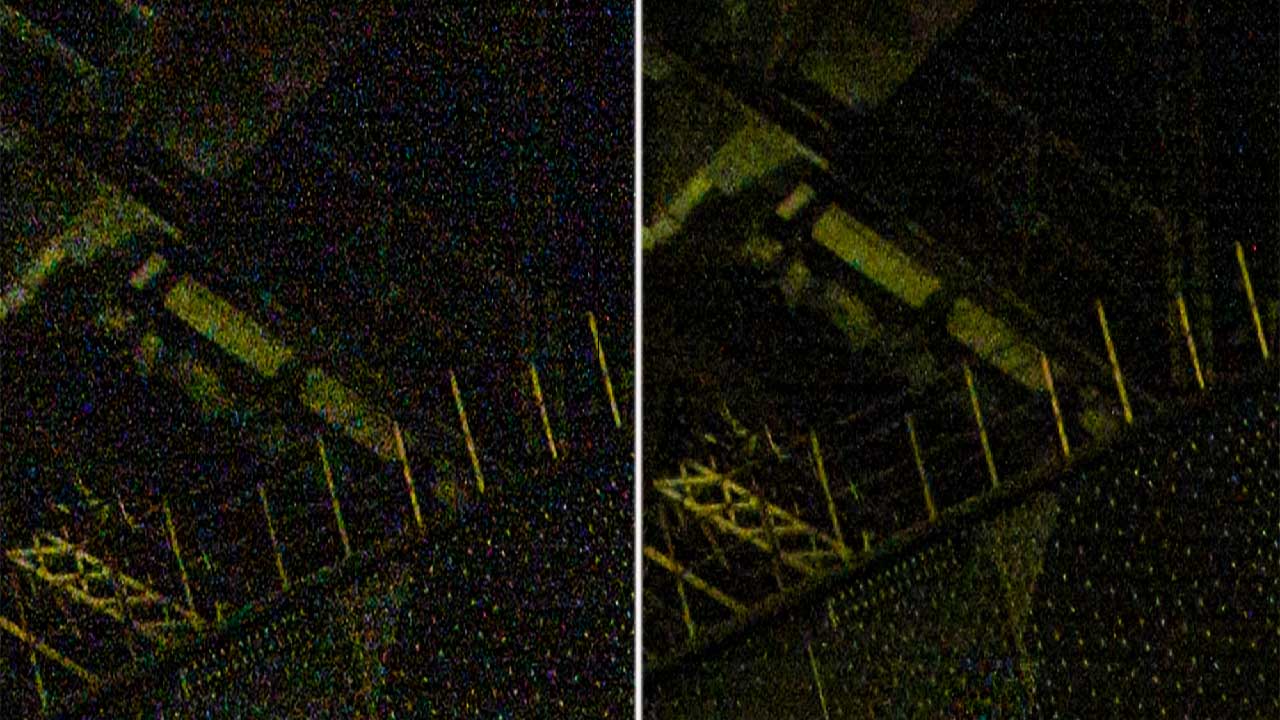
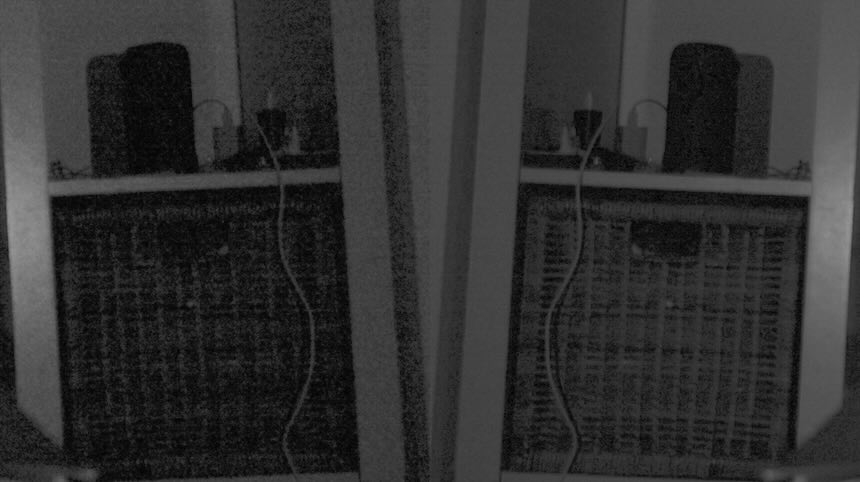
IRIS video denoising demo: dark low-light scene, before and after
IRIS video denoising demo: blue screen studio shot, before and after
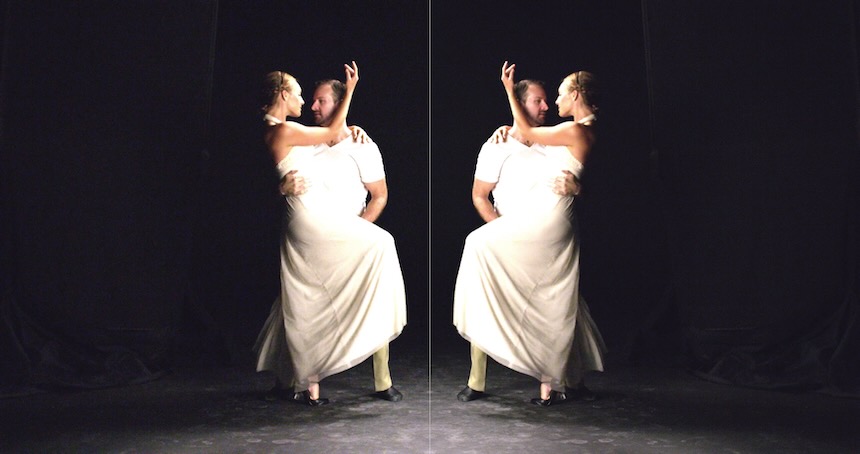
IRIS video denoising demo: dance performance, before and after
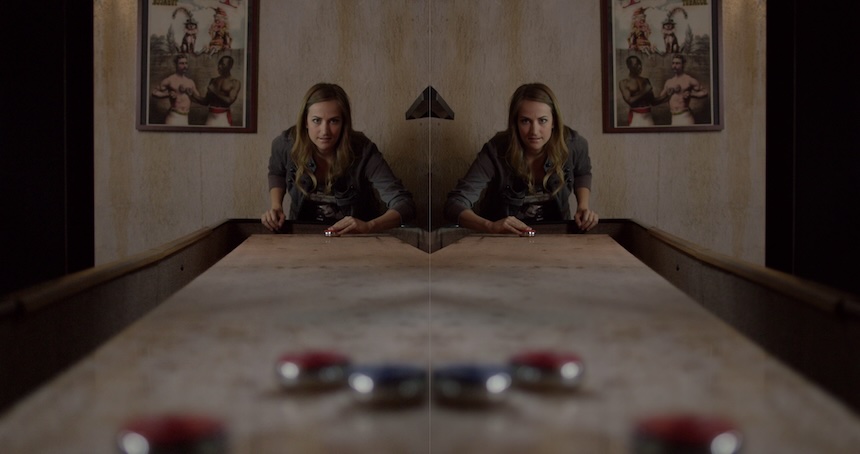
IRIS video denoising demo: Netflix test scene in a bar, before and after
Audio: Film Grain Synthesis explainedAudio explanation of AV1 Film Grain Synthesis with IRIS

IRIS.ANALYST

Audio: product explainedIRIS.ANALYST explained: audio description of per-shot video analytics
IRIS.ANALYST demo: moon in UHD with resolution and noise metrics
IRIS.ANALYST demo: city gate at night with resolution and noise metrics
IRIS.ANALYST demo: 9x7 city skyline with resolution and noise metrics
IRIS.ANALYST demo: 9x7 city skyline, post version
IRIS.ANALYST demo: tiger in UHD with resolution and noise metrics

IRIS.BROADCAST

IRIS.BROADCAST

IRIS.AI

IRIS.AI

IRIS.RAW & BRAW-2-IRIS Workflows

IRIS.RAW
BRAW2IRIS

Film Grain Synthesis

FGS sample, outdatedAV1 Film Grain Synthesis test: 16mm film at 1.2 Mbit/s
FGS sample, outdatedAV1 Film Grain Synthesis test: 16mm film at 2 Mbit/s